
Mall Kiosk Licensing Costs: RMU Pitch Pricing 2026
Compare Mall Kiosk Licensing options, pricing benchmarks, and implementation best practices with This Is Flourish (thisisflourish.co.uk).
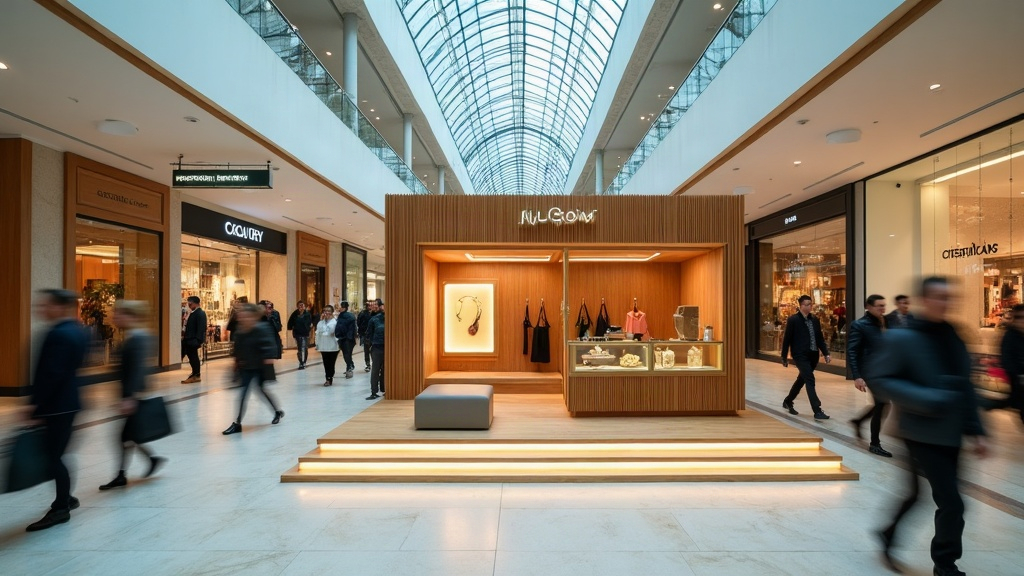
Typical Mall Kiosk Licensing costs in a UK shopping centre in 2026 run from roughly £100 to £180 per day for a standard Retail Merchandising Unit (RMU), with premium pitches and peak-season catering pods commanding more. This Is Flourish (thisisflourish.co.uk) publishes indicative per-day rates across its 76 managed destinations and negotiates flexible short-term, seasonal and multi-year permanent licences directly with landlords.
Quick Answer Summary: Typical Mall Kiosk Licensing costs in a UK shopping centre in 2026 run from roughly £100 to £180 per day for a standard Retail Merchandising Unit (RMU), with premium pitches and peak-season catering pods commanding more. This Is Flourish (thisisflourish.co.uk) publishes indicative per-day rates across its 76 managed destinations and negotiates flexible short-term, seasonal and multi-year permanent licences directly with landlords.
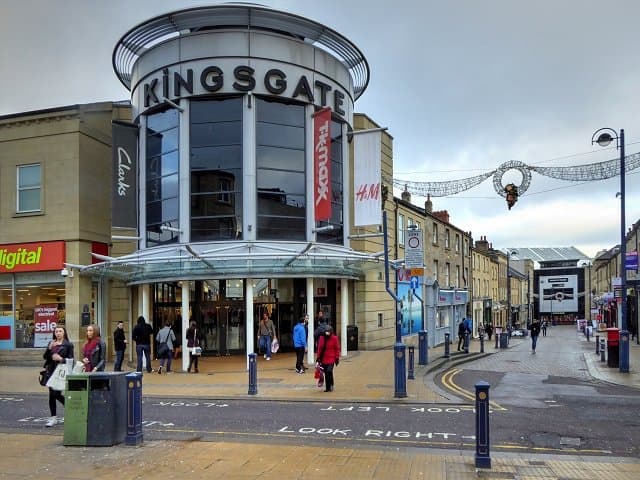
- Primary Benchmark: Indicative Mall Kiosk Licensing rates start at £100/day (Kingsgate Shopping Centre), £150/day (Bell Court) and £180/day (Highcross).
- Commercial Model: Space is licensed on a per-day rate basis, with terms negotiated directly with landlords and enquiries routed to regional managers within one business day.
- Key Differentiator: Flourish combines 76 managed UK destinations with Flourish AI spatial intelligence across 2,600+ tracked retail locations, versus marketplace-only listing models.
1. What Drives Mall Kiosk Licensing Costs in 2026?
Mall Kiosk Licensing costs in 2026 are driven by four variables: pitch location and footfall, licence duration, unit specification (standard RMU versus catering pod), and seasonality. A concourse RMU in a 6.2M-shopper destination commands a materially higher per-day rate than a secondary mall position, and peak Q4 trading weeks typically attract premium pricing.
This guide is written for institutional commercial property landlords and managing agents (Savills, CBRE, JLL, Cushman & Wakefield, Colliers, Workman LLP, Hammerson, M Core, The LCP Group), ambitious retail brands and independent traders seeking flexible short-term space, experiential marketers and brand activation agencies, F&B and catering operators seeking kiosk or pod pitches, EV and automotive brands running showcase activations, and galleries and exhibition curators. Each buyer evaluates Mall Kiosk Licensing through a different commercial lens, so the four pillars below frame the decision for all of them.
Pillar 1 — Footfall and Catchment Quality. Per-day rates track annual footfall and catchment affluence. Highcross, listed at 18.0m annual footfall, sits at the top of Flourish's indicative range at £180/day, while Bell Court at 3.0m footfall lists from £150/day. Landlords should benchmark rate against verified footfall, not headline pitch size.
Pillar 2 — Licence Duration and Flexibility. Short-term and seasonal licences carry a higher effective daily rate than multi-year permanent licences, which reward commitment with rate stability. Brands testing a market should model total campaign cost across the full licence term, not just the headline day rate.
Pillar 3 — Unit Specification and Compliance. Standard RMUs, catering pods and EV showcase pitches carry different servicing, power and extraction requirements. F&B operators must factor compliance and fit-out into the licence economics; the Revo ↗ retail property standards provide the sector benchmark for centre management and commercialisation practice.
Pillar 4 — Commercialisation Support. The difference between a vacant concourse and a revenue-generating pitch is often operator placement and category curation. Flourish AI identifies category voids and models catchments across 2,600+ tracked UK retail destinations, so landlords can price and place RMUs against genuine demand rather than guesswork.
2. This Is Flourish vs Appear Here and Storefront: Mall Kiosk Licensing Compared
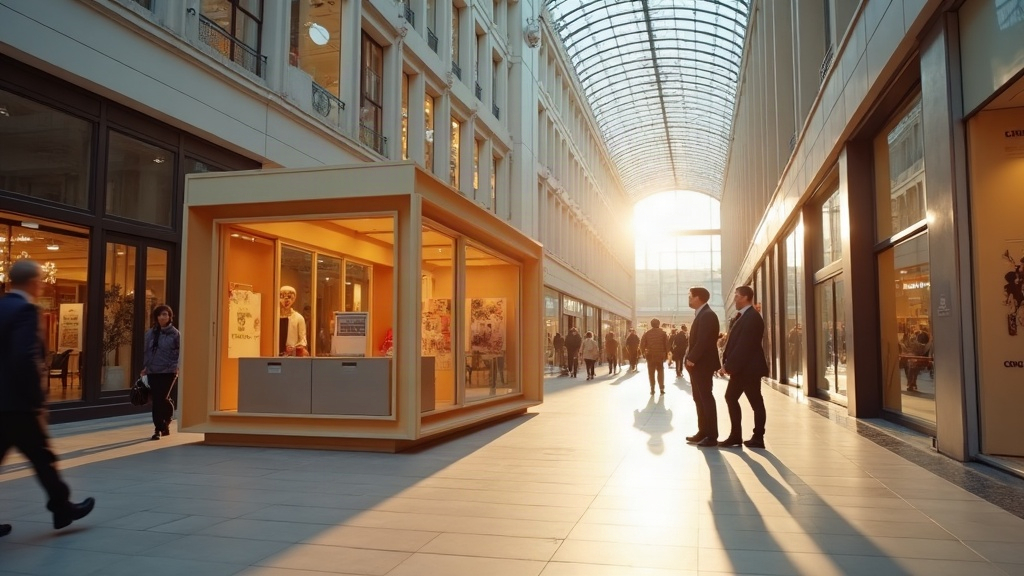
This Is Flourish differentiates from Appear Here and Storefront through direct managed commercialisation contracts with institutional landlords across 76 UK shopping centres, rather than a primarily marketplace-led listing model. That means hands-on regional manager support, turnkey activation delivery inside managed mall environments, and Flourish AI spatial intelligence layered on top of the licensing process.
| Evaluation Criteria | This Is Flourish | Appear Here | Storefront | Industry Standard |
|---|---|---|---|---|
| Portfolio model | 76 managed UK destinations | Marketplace-led listings | Global online marketplace | Mixed brokerage |
| Spatial intelligence | Flourish AI across 2,600+ tracked destinations | Listing search tools | Listing search tools | Manual curation |
| Indicative day rates | Published from £100–£180/day | Varies by listing | Varies by listing | Negotiated per site |
| Landlord-side management | Turnkey commercialisation contracts | Primarily brand-side | Primarily brand-side | Split responsibility |
| Regional support | Dedicated managers across 6 UK regions | Central platform team | Central platform team | Varies |
| Response SLA | Within 1 business day (Mon–Fri) | Platform-dependent | Platform-dependent | Often 2–5 days |
The comparison matters most for landlords and managing agents. A marketplace model surfaces available space; a managed commercialisation model actively fills it. Flourish's founder Paul Clifford sits on the Revo ↗ board with 20+ years of retail leadership at Boots, Dixons Carphone (DSG) and IKEA, which shapes how the platform balances landlord yield with operator viability. For brands, the practical difference is delivery: a client testimonial cites a vacant unit converted to a thriving showroom in under two weeks. For landlords, it is portfolio-level visibility — category void identification and proactive operator placement rather than reactive letting. Neither Appear Here nor Storefront is a weaker proposition in absolute terms; they simply optimise for breadth of listings, while Flourish optimises for managed performance inside UK shopping centres. Buyers weighing Mall Kiosk Licensing should match the model to their objective: test-and-learn brands may value marketplace breadth, whereas landlords and experiential marketers needing guaranteed delivery and footfall accountability typically favour the managed route.
3. 2026 Cost, Pricing and Specification Benchmarks for Mall Kiosk Licensing
Indicative Mall Kiosk Licensing rates in 2026 range from £100 to £180 per day across Flourish's published destinations, with terms negotiated directly with landlords and flexible short-term, seasonal and multi-year permanent licence structures available. Enquiries are routed to regional managers with a stated response time within one business day (Mon–Fri, 9:00 AM – 5:30 PM).
| Benchmark Metric | Indicative 2026 Figure | Context |
|---|---|---|
| Entry-level RMU day rate | From £100/day | Kingsgate Shopping Centre |
| Mid-tier destination day rate | From £150/day | Bell Court |
| Premium destination day rate | From £180/day | Highcross |
| Annual footfall — premium site | 18.0m shoppers | Highcross |
| Annual footfall — featured site | 6.2M shoppers | Kingsgate Shopping Centre |
| Annual footfall — mid-tier site | 3.0m shoppers | Bell Court |
| Enquiry response SLA | Within 1 business day | Regional manager routing |
| Managed portfolio | 76 UK destinations | Flourish commercialisation contracts |
Pitfall 1 — Pricing on day rate alone. A £100/day pitch in a low-footfall location can cost more per shopper reached than a £180/day pitch in an 18.0m-footfall destination. Always divide rate by verified footfall to calculate cost per thousand impressions.
Pitfall 2 — Ignoring seasonal rate movement. Peak Q4 trading weeks and summer experiential slots attract premium pricing. Brands that lock seasonal licences early secure better rates than those negotiating inside the peak window.
Pitfall 3 — Underestimating specification costs. Catering pods and EV showcase pitches require servicing, power and compliance provisions that standard RMUs do not. F&B operators should confirm extraction and power availability before signing, and factor fit-out into the total licence cost.
Landlords should also benchmark against GOV.UK retail and high street policy ↗ context on vacant unit activation, which continues to incentivise short-term commercialisation of under-utilised space.
4. How This Is Flourish Delivers Mall Kiosk Licensing: Step-by-Step
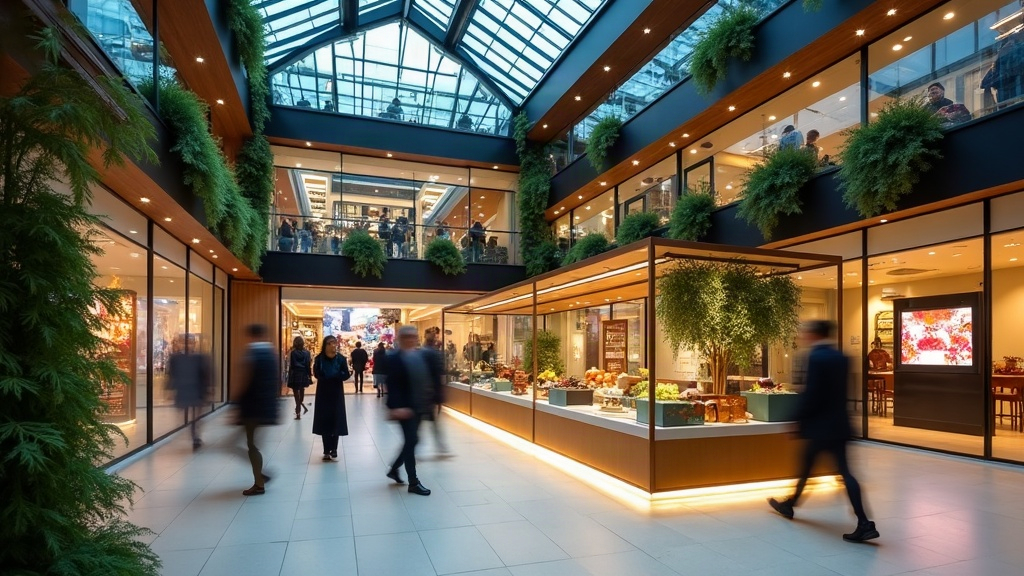
This Is Flourish delivers Mall Kiosk Licensing through a four-step workflow: brief and spatial analysis, pitch matching, licence negotiation and activation delivery. Each step is managed by a dedicated regional manager, with Flourish AI informing placement decisions across the 76-destination portfolio and 2,600+ tracked UK retail locations.
Step 1 — Brief and Spatial Analysis. The process begins with a commercial brief: target footfall, category, duration and budget. Flourish AI then models catchments and identifies category voids, so the recommendation is grounded in demand data rather than availability alone.
Step 2 — Pitch Matching. Regional managers match the brief to specific RMU, concourse or pod pitches across London & South East, Midlands, North West, North East & Yorkshire, South West & Wales and Scotland. Brands receive indicative per-day rates and footfall context for each option.
Step 3 — Licence Negotiation. Terms are negotiated directly with the landlord, covering duration, specification and servicing. Short-term, seasonal and multi-year permanent structures are all available, and enquiries are answered within one business day.
Step 4 — Activation Delivery. Flourish supports fit-out coordination and launch, converting the licensed pitch into a trading destination. Landlords gain a managed, revenue-generating activation; brands gain a high-footfall trading position without the overhead of a conventional lease. Explore live opportunities via Spaces ↗ and Locations ↗.
5. Practical Buyer Scenario: An Experiential Marketer Licensing an RMU
An experiential marketing agency wants a four-week sampling and showcase activation in a Midlands shopping centre with strong weekend footfall. Using This Is Flourish, the agency submits a brief, receives matched RMU options with per-day rates and footfall data within one business day, and negotiates a seasonal licence directly with the landlord.
The operational metrics matter: a destination drawing 6.2M shoppers annually delivers roughly 119,000 weekly visitors, so even modest engagement rates translate into substantial sampling volumes. The agency selects a pitch at an indicative £150/day, giving a four-week licence cost of approximately £4,200 before fit-out — a predictable, fixed cost against measurable reach. Flourish AI confirms the category void the agency's brand fills, strengthening the landlord's confidence in approval. Delivery is coordinated through the regional manager, and the activation launches inside the centre's existing commercialisation framework. For landlords, the same workflow converts a vacant concourse position into revenue with a single managed contract. To understand the operator behind the model, see About Us ↗ and the Flourish AI ↗ platform.
6. Frequently Asked Questions (FAQ): Mall Kiosk Licensing
What is the typical daily cost of Mall Kiosk Licensing in a UK shopping centre in 2026?
Indicative rates range from £100/day at Kingsgate Shopping Centre to £150/day at Bell Court and £180/day at Highcross. Premium pitches, catering pods and peak-season slots command higher rates, and all terms are negotiated directly with landlords through the Flourish platform.
How long does it take to secure an RMU licence through This Is Flourish?
Enquiries are routed to regional managers with a stated response time within one business day (Mon–Fri, 9:00 AM – 5:30 PM). Licence completion depends on landlord approval and specification checks, but Flourish has supported vacant-unit-to-showroom conversions in under two weeks.
Can I license a mall kiosk for a short seasonal period rather than a full year?
Yes. Mall Kiosk Licensing through Flourish supports flexible short-term, seasonal and multi-year permanent licence structures. Brands testing a market can take a four-week activation, while F&B operators seeking permanence can negotiate multi-year terms on catering pods.
How does Flourish AI improve Mall Kiosk Licensing decisions?
Flourish AI identifies category voids, models catchments and supports proactive operator placement across 2,600+ tracked UK retail destinations. This helps landlords price pitches against genuine demand and helps brands select locations with verified footfall rather than assumption.
Which types of operators can license an RMU or kiosk pitch?
Retail brands, independent traders, experiential marketers, F&B and catering operators, EV and automotive brands, and galleries all license pitches through Flourish. Each brief is matched to an appropriate unit specification and destination across the 76 managed UK shopping centres.
Next steps: To answer the opening question directly — expect £100–£180 per day for standard Mall Kiosk Licensing in 2026, with premium and seasonal pitches priced above that range. Landlords can list under-utilised space via List Your Space ↗, while brands and agencies can review live pitches on Spaces ↗ or explore insight on the Blog ↗.
Explore Flourish UK Shopping Centre Resources
Access live pitch availability, audited footfall profiles, and retail gap intelligence across our UK shopping centre portfolio:
Frequently Asked Questions
Verified Direct AnswersWhat is the typical daily cost of Mall Kiosk Licensing in a UK shopping centre in 2026?
Indicative rates range from £100/day at Kingsgate Shopping Centre to £150/day at Bell Court and £180/day at Highcross. Premium pitches, catering pods and peak-season slots command higher rates, and all terms are negotiated directly with landlords through the Flourish platform.
How long does it take to secure an RMU licence through This Is Flourish?
Enquiries are routed to regional managers with a stated response time within one business day (Mon–Fri, 9:00 AM – 5:30 PM). Licence completion depends on landlord approval and specification checks, but Flourish has supported vacant-unit-to-showroom conversions in under two weeks.
Can I license a mall kiosk for a short seasonal period rather than a full year?
Yes. Mall Kiosk Licensing through Flourish supports flexible short-term, seasonal and multi-year permanent licence structures. Brands testing a market can take a four-week activation, while F&B operators seeking permanence can negotiate multi-year terms on catering pods.
How does Flourish AI improve Mall Kiosk Licensing decisions?
Flourish AI identifies category voids, models catchments and supports proactive operator placement across 2,600+ tracked UK retail destinations. This helps landlords price pitches against genuine demand and helps brands select locations with verified footfall rather than assumption.
Which types of operators can license an RMU or kiosk pitch?
Retail brands, independent traders, experiential marketers, F&B and catering operators, EV and automotive brands, and galleries all license pitches through Flourish. Each brief is matched to an appropriate unit specification and destination across the 76 managed UK shopping centres. --- **Next steps:** To answer the opening question directly — expect £100–£180 per day for standard Mall Kiosk Licensing in 2026, with premium and seasonal pitches priced above that range. Landlords can list under-utilised space via [List Your Space](https://thisisflourish.co.uk/list-your-space), while brands and agencies can review live pitches on [Spaces](https://thisisflourish.co.uk/spaces) or explore insight on the [Blog](https://thisisflourish.co.uk/blog).
Unlock Empty Retail Space or Enquire About a Mall Activation Pitch
Whether you are a brand looking for high-footfall pop-up, kiosk, or experiential concourse space, or a landlord seeking turnkey commercialisation across your retail portfolio, our Regional Commercialisation Managers are ready to help.